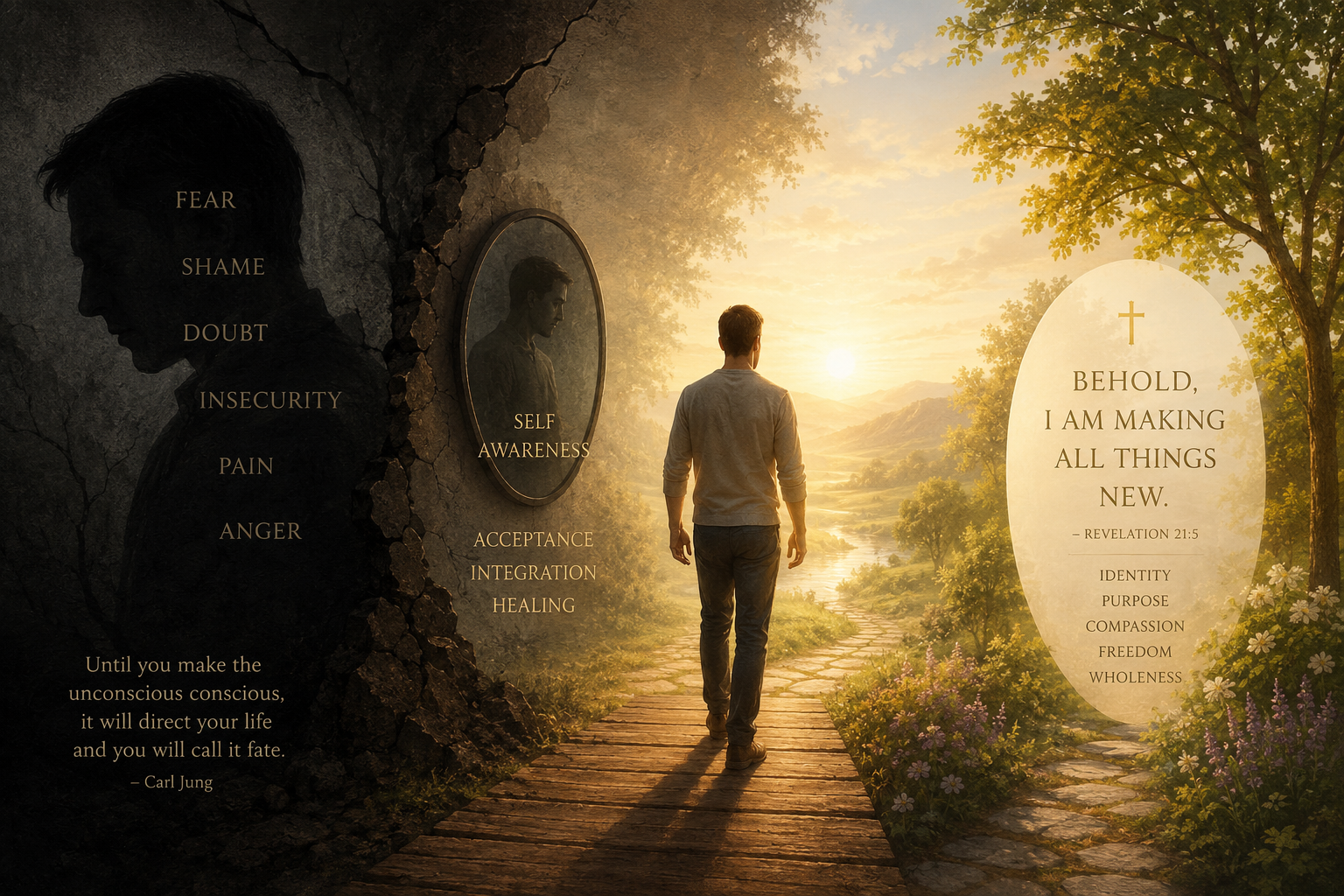
Many Christians strive to live faithful, loving and moral lives. Yet despite sincere faith, many people find themselves struggling with anger, jealousy, resentment, shame, envy, lust, pride, bitterness, addiction or destructive behaviours they wish they did not have.
Why does this happen?
Swiss psychiatrist Carl Jung suggested that every person possesses a “shadow” – the hidden aspects of themselves that they reject, suppress or deny. While Jung’s ideas were developed outside of Christian theology, many Christians have found that his insights help explain why inner conflicts often remain unresolved despite prayer, good intentions and strong beliefs.
Christian counselling can provide a safe and compassionate space to explore these hidden parts of ourselves while remaining grounded in faith, grace and biblical truth.
Carl Jung described the shadow as the unconscious part of the personality that contains qualities, emotions, desires and experiences we do not wish to acknowledge.
The shadow may include:
- Anger
- Envy
- Pride
- Selfishness
- Lust
- Fear
- Resentment
- Shame
- Unresolved grief
- Emotional wounds
- Rejected strengths and talents
The shadow develops because we learn that certain feelings or behaviours are unacceptable. Instead of processing them, we hide them from ourselves and others.
However, what is buried does not disappear.
Instead, it often emerges through:
One of the most powerful illustrations of the shadow self in literature is Robert Louis Stevenson’s classic novella, Strange Case of Dr Jekyll and Mr Hyde.
Although written before Carl Jung formally developed his theory of the shadow, the story vividly portrays what happens when a person attempts to separate the darker aspects of their nature from their conscious identity.
Dr Henry Jekyll is a respected, intelligent and admired gentleman. He wishes to be seen as moral, upright and respectable. Yet beneath the surface he struggles with desires, impulses and tendencies that conflict with the image he presents to the world.
Rather than acknowledging and wrestling with these aspects of himself, Jekyll attempts to isolate them. Through scientific experimentation, he creates the persona of Edward Hyde—a figure who embodies everything Jekyll wishes to deny.
At first, Hyde appears to offer freedom. Jekyll can indulge impulses without damaging his public reputation. But as the story progresses, Hyde grows stronger while Jekyll becomes weaker. Eventually, the very darkness Jekyll sought to control begins to dominate him.
Carl Jung would later suggest that this is precisely what can happen when the shadow is ignored or repressed. The more forcefully we deny parts of ourselves, the more power they may acquire beneath conscious awareness. What remains hidden does not disappear; it often emerges in unexpected and destructive ways.
The difference between Stevenson’s story and the Christian story is ultimately one of hope.
Jekyll’s journey ends in despair because he faces his shadow alone.
The Christian story offers a different ending.
We are invited to stand honestly before God, acknowledging both the beauty and brokenness within us. We do not overcome darkness through denial, repression or self-effort alone. Rather, we encounter a God who already knows us completely and loves us completely.
Christian counselling can be part of this journey, helping individuals explore hidden wounds, unconscious patterns and difficult emotions in a safe environment where truth and grace meet.
In that sense, the goal is not to destroy the shadow, nor to be controlled by it, but to bring it into the light where healing, integration and transformation can occur.
As the Apostle John writes:
“If we walk in the light, as he is in the light, we have fellowship with one another…” (1 John 1:7)
The Christian response to the shadow is not fear.
It is light.
Jekyll believed he could remove the darkness from himself and remain only the good.
Christian theology offers a different understanding of human nature.
The Bible teaches that every person is created in the image of God and possesses immense worth and dignity. Yet it also recognises the reality of human brokenness and sin.
The answer is therefore not denial but redemption.
Rather than dividing ourselves into separate parts, we are invited to bring every part of ourselves before God.
Our anger.
Our fear.
Our envy.
Our shame.
Our wounds.
Our failures.
The Christian life is not about pretending these things do not exist. It is about allowing God’s grace to transform them.
Christianity is not merely about becoming better behaved.
It is about transformation.
The goal is not creating a false image of perfection but becoming increasingly honest, integrated and Christ-like.
Jung believed that psychological maturity requires acknowledging all aspects of ourselves.
Christian faith adds an important dimension:
We do not face our shadows alone.
We bring them before a God who knows us completely and loves us completely.
The Christian journey involves both truth and grace.
Truth allows us to see ourselves honestly.
Grace allows us to face what we find without despair.
The Christian faith has long recognised a similar reality.
Scripture acknowledges that human beings experience an inner struggle between the person we wish to be and the impulses that pull us away from God’s purposes.
The Apostle Paul writes:
“For I do not do the good I want to do, but the evil I do not want to do—this I keep on doing.” (Romans 7:19)
Unlike Jekyll, Christianity does not teach that we can separate ourselves from our darker tendencies. Nor does it suggest that presenting a respectable exterior solves the problem.
Instead, the Christian path is one of honesty, confession and transformation.
Jekyll’s tragedy is not that he possesses a Hyde. His tragedy is that he refuses to acknowledge that Hyde is part of him.
Many Christians unknowingly make a similar mistake. We may present ourselves as patient while hiding anger, forgiving while harbouring resentment, faithful while wrestling with doubt, or loving while carrying wounds we have never addressed.
Over time, this can create what some counsellors call a “spiritual shadow”—the gap between the person we appear to be and the person we truly are.
Christian counselling often helps people recognise their own “Mr Hyde” moments—not to condemn them, but to understand them.
For example:
- The harsh criticism of others may conceal hidden self-criticism.
- Uncontrolled anger may mask deep hurt.
- Perfectionism may hide profound fear of rejection.
- Pride may conceal insecurity.
- Addiction may cover unresolved pain.
When these hidden struggles remain buried, they often continue to influence behaviour from the shadows.
When they are brought into the light, healing becomes possible.
This reflects the words of Jesus:
“The truth will set you free.” (John 8:32)
The difference between Stevenson’s story and the Christian story is ultimately one of hope.
Jekyll’s journey ends in despair because he faces his shadow alone.
The Christian story offers a different ending.
We are invited to stand honestly before God, acknowledging both the beauty and brokenness within us. We do not overcome darkness through denial, repression or self-effort alone. Rather, we encounter a God who already knows us completely and loves us completely.
Christian counselling can be part of this journey, helping individuals explore hidden wounds, unconscious patterns and difficult emotions in a safe environment where truth and grace meet.
In that sense, the goal is not to destroy the shadow, nor to be controlled by it, but to bring it into the light where healing, integration and transformation can occur.
As the Apostle John writes:
“If we walk in the light, as he is in the light, we have fellowship with one another…” (1 John 1:7)
The Christian response to the shadow is not fear.
It is light.
The Bible does not use Jung’s terminology, but Scripture recognises the reality of hidden motives and internal struggles.
King David prayed:
“Search me, God, and know my heart; test me and know my anxious thoughts.” (Psalm 139:23)
The Apostle Paul famously wrote:
“For I do not do the good I want to do, but the evil I do not want to do—this I keep on doing.” (Romans 7:19)
These passages acknowledge that human beings often struggle with aspects of themselves that remain hidden, conflicted or difficult to understand.
Christian counselling seeks to bring these struggles into the light of God’s grace rather than leaving them buried in darkness.
One of the most influential books on this topic is Meeting the Shadow: The Hidden Power of the Dark Side of Human Nature, edited by Connie Zweig and Jeremiah Abrams.
The book gathers essays from leading Jungian thinkers including:
- Robert A. Johnson
- James Hollis
- Marion Woodman
- John A. Sanford
These writers argue that the shadow is not simply a collection of “bad” qualities. It often contains forgotten gifts, creativity, courage, passion and authenticity.
When people deny their shadow, they frequently project it onto others.
For example:
- A person who denies their own anger may constantly accuse others of being hostile.
- Someone who represses ambition may criticise successful people.
- A person uncomfortable with their own weaknesses may become harshly judgemental toward others.
This process is known as projection and can damage relationships, churches, marriages and communities.
Many Christians unintentionally develop a spiritual shadow.
This happens when people believe they must always appear:
- Happy
- Loving
- Forgiving
- Strong
- Patient
- Faithful
While these qualities are admirable, problems arise when genuine struggles are denied rather than addressed.
A Christian may:
- Feel angry but insist they are not.
- Experience grief but suppress it.
- Struggle with temptation but hide it.
- Feel resentment while speaking kindly.
- Present a perfect image while suffering internally.
Over time, this can create emotional exhaustion, burnout, anxiety and a sense of spiritual disconnection.
Authentic spiritual growth requires honesty before God.
Christian counselling is not about encouraging sinful behaviour or abandoning biblical values.
Instead, it helps people understand themselves more truthfully.
The goal is not self-indulgence but self-awareness.
Christian counselling can help you:
Recognise Hidden Patterns
Many emotional reactions are rooted in experiences we have never fully processed.
Counselling helps identify recurring themes and triggers.
Explore Difficult Emotions Safely
Anger, jealousy, fear and shame can be examined without condemnation.
Understanding an emotion is not the same as acting upon it.
Heal Old Wounds
Childhood experiences, rejection, trauma and painful relationships often contribute to shadow material.
Healing these wounds can reduce their influence.
Reduce Projection
Counselling can help identify where we may be attributing our own unresolved issues to other people.
This often improves marriages, friendships and church relationships.
Integrate Faith and Psychology
Christian counselling combines psychological insight with prayer, biblical reflection and spiritual wisdom.
The aim is greater wholeness under God’s grace.
Deep, thoughtful, emotionally mature Christian psychotherapy with pastoral insight
If this resonates with you, you might find it helpful to speak with someone. You can arrange a confidential conversation here. You don’t need to know exactly what to say. I aim to respond personally within 24 hours. No obligation.
Arrange an Initial Confidential Consultation
Your details are treated with complete confidentiality.