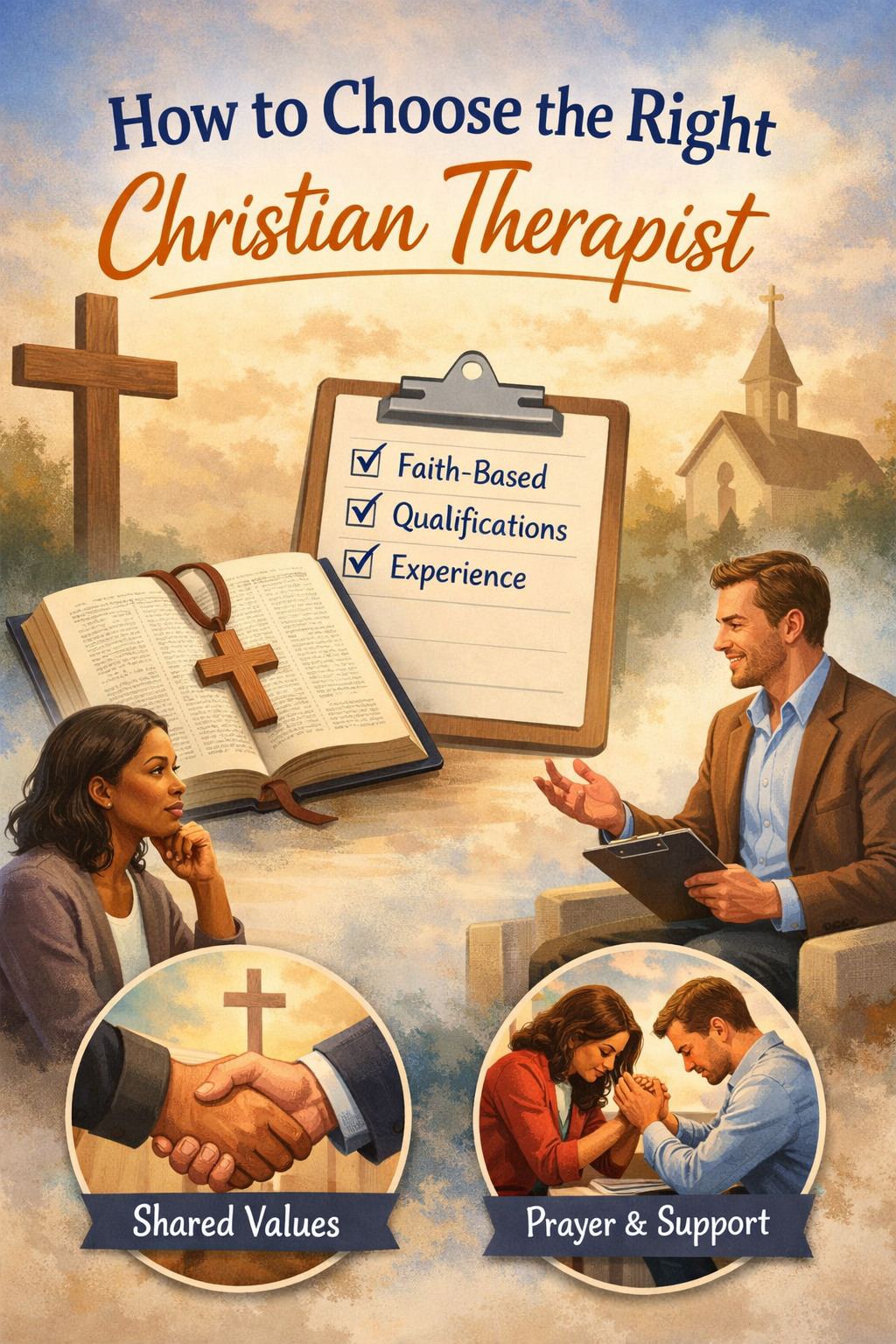
Choosing a therapist is an important decision. Choosing a Christian therapist can feel even more significant, because you are not only looking for professional competence but also spiritual sensitivity. You want someone who understands your faith language, your values, and the deeper spiritual dimensions of your struggles.
Whether you are seeking help for anxiety, depression, marriage difficulties, trauma, or leadership pressure, this guide will help you make a wise, grounded decision.
1. Clarify What You Mean by “Christian Therapist”
Not all Christian therapists practise in the same way. It helps to clarify what you are actually looking for.
Some therapists:
- Are Christians but practise in a clinically neutral way unless faith is raised.
- Integrate prayer, Scripture, and theology directly into sessions.
- Work with Christian clients but avoid explicit spiritual interventions.
- Specialise in pastoral counselling rather than psychotherapy.
Ask yourself:
- Do I want prayer in sessions?
- Do I want Scripture to be part of the process?
- Am I looking for deep theological reflection, or simply someone who understands my worldview?
- Do I want a therapist who shares my denomination, or is that less important?
Clarity here prevents disappointment later.
2. Check Professional Accreditation
Faith alone does not make someone a safe therapist. Professional training and ethical accountability matter deeply.
In the UK, look for accreditation with bodies such as:
- British Association for Counselling and Psychotherapy (BACP)
- National Counselling and Psychotherapy Society (NCPS)
- UK Council for Psychotherapy (UKCP)
Accreditation means:
- The therapist has completed recognised training.
- They adhere to ethical codes.
- They receive supervision.
- There is a complaints procedure if needed.
A healthy Christian therapist should value both spiritual maturity and professional excellence.
3. Assess Their Theological Maturity
You do not need a theologian, but you do need someone who handles faith with wisdom.
Be cautious if a therapist:
- Over-spiritualises psychological problems.
- Dismisses mental health diagnoses as “lack of faith.”
- Offers simplistic answers to complex trauma.
- Uses shame or moral pressure in sessions.
A mature Christian therapist understands:
- The difference between sin, suffering, and psychological injury.
- That anxiety and depression are not moral failures.
- That boundaries are biblical.
- That grace and truth must coexist.
If you are recovering from what is sometimes called “doormat Christianity” — people-pleasing, over-giving, spiritual guilt — you will especially need someone who can help you build healthy boundaries without attacking your faith.
4. Look for Clinical Specialisation
Christian identity is important — but so is expertise.
Ask:
- Do they specialise in anxiety?
- Do they understand trauma?
- Have they worked with marriages?
- Do they have experience with leadership burnout?
- Do they understand executive pressure?
For example:
- Trauma requires specific training.
- Couples therapy requires structured models.
- Complex grief requires depth.
- Narcissistic abuse requires discernment.
A Christian worldview does not automatically mean competence in every issue.
5. Consider Personality and Presence
Therapy is relational. You are not choosing a sermon — you are choosing a human being to sit with your pain.
In your initial consultation, ask yourself:
- Do I feel heard?
- Do they interrupt or dominate?
- Do I feel judged?
- Do I feel safe?
- Do I feel subtly pressured?
- Do I feel calmer speaking with them?
You should feel:
- Respected.
- Emotionally safe.
- Intellectually engaged.
- Spiritually understood.
Chemistry matters more than branding.
6. Ask Practical Questions
Do not be afraid to ask direct questions before committing.
You might ask:
- How do you integrate faith into therapy?
- What is your approach when a client disagrees with you?
- How do you handle confidentiality?
- Do you work online or in-person?
- What are your fees and cancellation policy?
- How long do clients typically work with you?
Clear structure creates safety.
7. Watch for Red Flags
A healthy Christian therapist should never:
- Impose doctrine.
- Pressure you to conform spiritually.
- Dismiss medication out of hand.
- Shame you for doubt.
- Break confidentiality.
- Claim exclusive spiritual authority over your life.
Christian counselling should feel strengthening — not controlling.
8. Decide Between Online and In-Person
Online therapy has become increasingly common and effective.
Benefits of online:
- Access to specialists across the UK.
- Greater privacy.
- Flexible scheduling.
- Comfort of your own space.
Benefits of in-person:
- Physical presence.
- Structured therapeutic environment.
- Fewer technical barriers.
Choose what fits your lifestyle and emotional needs.
9. Understand the Difference Between Pastoral Care and Therapy
Pastoral conversations can be deeply valuable — but they are not the same as psychotherapy.
Pastors:
- Offer spiritual guidance.
- Provide prayer and biblical counsel.
- Support faith formation.
Therapists:
- Work with trauma patterns.
- Address attachment wounds.
- Use evidence-based interventions.
- Help restructure thinking and behaviour.
Sometimes you may need both.
10. Trust Discernment, Not Urgency
You do not need to rush into therapy with the first Christian name you find online.
Pray.
Reflect.
Compare.
Trust your instincts.
Peace and clarity are good indicators.
11. When the Fit Isn’t Right
Even after starting therapy, you are allowed to reassess.
It is healthy to say:
- “This doesn’t feel like the right fit.”
- “I need a different approach.”
- “I’m looking for something deeper.”
- “I need more structure.”
A good therapist will not be offended by honesty.
12. Remember What Good Christian Therapy Feels Like
Healthy Christian therapy should help you:
- Develop stronger boundaries.
- Reduce anxiety and emotional reactivity.
- Deepen your relationship with God in a grounded way.
- Heal shame.
- Think clearly.
- Live with more courage and integrity.
It should not make you smaller.
It should not make you fearful.
It should not make you spiritually dependent.
It should make you more whole.
Final Thoughts
Choosing a Christian therapist is not about finding someone who quotes Scripture the most. It is about finding someone who combines:
- Clinical competence
- Emotional intelligence
- Ethical integrity
- Spiritual maturity
The right therapist will respect both your humanity and your faith.
Take your time. Ask wise questions. Notice how you feel.
And remember: seeking help is not weakness — it is stewardship of your mind, heart, and soul.