Few paintings have captured the human condition as powerfully as Rembrandt’s The Return of the Prodigal Son. Equally, few books have explored its spiritual depth as profoundly as Henri Nouwen’s classic work, The Return of the Prodigal Son.
Nouwen spent years reflecting on Rembrandt’s masterpiece and discovered that the painting speaks not only about one lost son but about all of us. We each carry wounds, regrets, resentments, failures, and disappointments. We all know what it is to be lost, whether through our own choices or through the hurts inflicted upon us by others.
At the heart of both the painting and Nouwen’s reflections is a simple yet transformative truth: healing begins when mercy meets honesty.
In Jesus’ parable, the younger son leaves home seeking freedom. He pursues pleasure, independence, and self-determination. Yet what initially appears liberating ultimately leaves him empty, isolated, and broken.
Many people who seek counselling describe a similar experience. They may not have wandered geographically, but emotionally they feel far from home. Shame, addiction, anxiety, anger, relationship difficulties, or painful life events can leave us disconnected from ourselves, from others, and from God.
The turning point in the story occurs when the son finally faces reality. He stops running. He acknowledges his mistakes and decides to return.
His words are simple:
“Father, I have sinned against heaven and against you.”
The journey home begins with honesty.
In modern culture, apologising is sometimes seen as weakness. Yet genuine repentance requires immense courage.
To say “I’m sorry” is to acknowledge our imperfections. It means laying down pride and admitting that we have hurt others or made poor choices.
Henri Nouwen observed that the prodigal son does not come home with excuses. He does not blame his circumstances. He simply presents himself as he is.
This kind of honesty can be deeply healing.
In counselling, people often discover that carrying guilt and unresolved regret is exhausting. The energy required to justify ourselves, deny our mistakes, or hide our wounds can become overwhelming.
True freedom begins when we stop pretending.
ty.
Perhaps the most striking feature of Rembrandt’s painting is the father.
The son’s head is bowed. His clothes are torn. His dignity has been lost. Yet the father does not lecture him. He does not punish him. He does not demand explanations.
Instead, he embraces him.
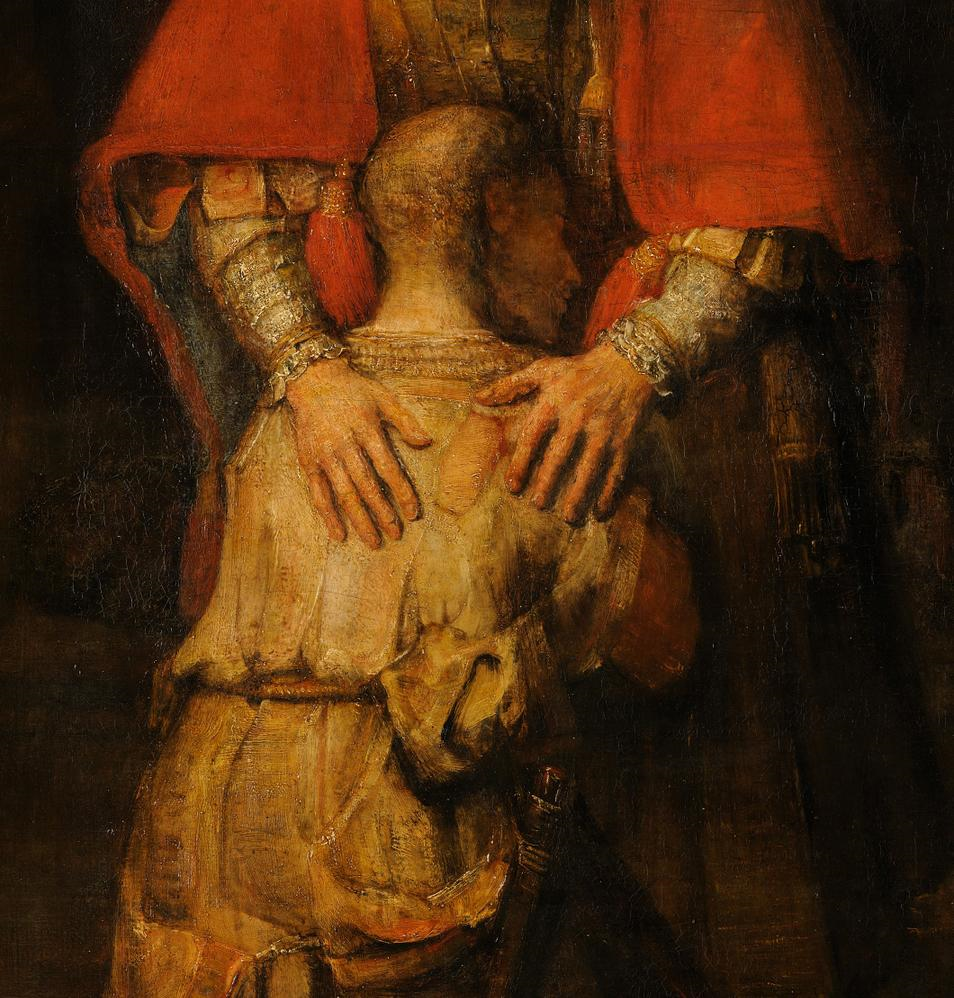
Nouwen writes extensively about the father’s hands resting upon the son’s shoulders. One hand appears strong and masculine; the other softer and more tender. Together they symbolise both strength and compassion.
The father embodies the heart of God.
Many Christians intellectually believe God forgives them, yet struggle emotionally to accept that forgiveness. They continue punishing themselves long after God has extended mercy.
The painting invites us to ask a difficult question:
What if God’s mercy is greater than your self-condemnation?
Nouwen’s insight goes further. He recognised that most of us are not only the younger son.
We are also the elder brother.
The elder brother stayed home, obeyed the rules, and worked faithfully. Yet he became bitter, resentful, and judgmental.
His wound was not rebellion but unforgiveness.
Many people carry similar burdens. They feel hurt by family members, former partners, colleagues, churches, or friends. The offence may be real and significant. Yet over time resentment can become a prison.
Forgiveness is not pretending the hurt never happened.
Forgiveness is choosing not to let the wound define the future.
As the saying goes, unforgiveness is like drinking poison and expecting the other person to suffer.
One of the greatest obstacles to emotional healing is our tendency to keep reliving yesterday.
We replay conversations.
We revisit mistakes.
We rehearse old arguments.
We carry offences long after the moment has passed.
The problem is not that the past happened.
The problem is when the past continues to control the present.
Forgiveness allows us to release our grip on what cannot be changed.
This does not mean forgetting. It does not mean denying injustice. It does not always mean reconciliation is possible or safe.
Rather, forgiveness means surrendering the right to keep collecting emotional debts.
It means entrusting justice to God while choosing freedom for ourselves.
The prodigal son experiences more than forgiveness; he experiences reconciliation.
He is welcomed back into relationship.
While reconciliation requires both parties and is not always achievable, it remains one of the most beautiful possibilities of grace.
Healthy reconciliation involves:
- Honest communication
- Genuine repentance
- Appropriate boundaries
- Mutual responsibility
- A willingness to move forward
Many relationships cannot return to what they once were. Yet they can often become something healthier than before.T
One of the most moving features of Rembrandt’s painting is something many viewers initially overlook: the father’s hands.
Henri Nouwen became fascinated by them during his prolonged contemplation of the painting. At first glance, both hands appear to rest gently on the shoulders of the kneeling son. Yet closer inspection reveals they are strikingly different.
The father’s left hand appears large, strong, broad, and muscular. It conveys firmness, protection, and security. It is the hand of a father who is capable of carrying burdens and providing stability. It suggests strength without domination.
The father’s right hand is noticeably different. It appears softer, more refined, and almost feminine in appearance. The fingers are slender and delicate. Rather than gripping, it seems to caress. It communicates tenderness, compassion, gentleness, and nurture.
Nouwen believed this contrast was intentional. Together, the hands reveal the fullness of God’s love. God’s mercy is neither weak sentimentality nor harsh authority. It is both strong and tender. God is powerful enough to rescue us and gentle enough to heal us.
Many people who seek counselling have experienced one side of this balance but not the other. Some have known authority without compassion. Others have encountered kindness without guidance. The result can be confusion about who God truly is.
Rembrandt’s father offers a different picture.
His strong hand says:
“You are safe.”
His gentle hand says:
“You are loved.”
Together they communicate the message every wounded heart longs to hear:
“You can come home.”
For Nouwen, these hands also speak to the human experience of forgiveness. When we apologise and acknowledge our failures, we often fear rejection. We expect criticism, disappointment, or punishment. Yet the father does not push the son away. His hands remain firmly and lovingly upon him.
The son arrives with shame. The father responds with mercy.
This image challenges us to consider how we relate both to God and to one another. Are our relationships marked only by strength, or only by softness? Can we speak truth while also showing compassion? Can we hold appropriate boundaries while remaining merciful?
Healthy forgiveness and reconciliation require both hands.
The strong hand recognises that wrong has occurred. The gentle hand chooses mercy over revenge.
The strong hand establishes boundaries where necessary. The gentle hand refuses to allow bitterness to take root.
The strong hand seeks justice. The gentle hand offers grace.
Perhaps this is why the painting continues to resonate so deeply. It reflects the kind of love that heals. Not a love that ignores wrongdoing, but a love that is strong enough to face it and compassionate enough to move beyond it.
In Christian counselling, many people discover that emotional healing begins when they encounter both of these realities. We need the courage to face the truth about ourselves and our relationships. Yet we also need the mercy that allows us to move forward rather than remain trapped by guilt, resentment, or regret.
The father’s hands remind us that forgiveness is not merely an event. It is an embrace. It is the meeting place of truth and grace, strength and tenderness, justice and mercy.
And it is there, in that embrace, that genuine reconciliation begins.
Christian counselling provides a safe space to explore unresolved hurts, guilt, shame, and relationship difficulties through both psychological understanding and Christian faith.
Together we can examine:
- Struggles with forgiveness
- Family conflict
- Marital difficulties
- Feelings of shame and regret
- Unresolved anger
- Spiritual wounds
- Grief and loss
- Questions about reconciliation
Counselling cannot change the past, but it can help you respond differently to it.
Like the prodigal son, many people discover that healing begins not by running further away but by finding the courage to come home.
Perhaps Henri Nouwen’s most profound insight is that the spiritual journey does not end with being the prodigal son.
Eventually, we are called to become like the father.
We are invited to grow into people who extend mercy rather than judgement, compassion rather than condemnation, and reconciliation rather than division.
This is the mature Christian life.
To forgive as we have been forgiven.
To show mercy as we have received mercy.
To welcome others as God has welcomed us.
In a world marked by conflict, blame, and division, such grace remains revolutionary.
And perhaps that is why Rembrandt’s painting continues to move hearts centuries later.
Because deep down, every one of us longs to know that no matter how far we have wandered, there is still a way home.
Frequently Asked Questions on Forgiveness
No. Forgiveness does not erase memory. It means choosing not to remain captive to bitterness or resentment.
Yes. Forgiveness is primarily about your freedom and healing. Reconciliation may require the other person’s participation, but forgiveness does not.
Absolutely not. Forgiveness and healthy boundaries can coexist. In some situations, maintaining distance is necessary and wise.
Christian counselling provides a safe environment to process hurt, anger, grief, and disappointment while exploring biblical perspectives on forgiveness, mercy, and reconciliation.
Many Christians wrestle with shame and self-condemnation. Counselling can help you explore the difference between conviction and condemnation and learn to receive God’s grace more fully.
“The spiritual journey, Nouwen concluded, is not simply to recognise ourselves as the prodigal son. Eventually, we are called to become like the father—to become men and women whose hands reflect both strength and tenderness, truth and grace, justice and mercy. In a fractured world, this may be one of the most important forms of healing we can offer others.”
Deep, thoughtful, emotionally mature Christian psychotherapy with pastoral insight
If this resonates with you, you might find it helpful to speak with someone. You can arrange a confidential conversation here. You don’t need to know exactly what to say. I aim to respond personally within 24 hours. No obligation.
Arrange an Initial Confidential Consultation
Your details are treated with complete confidentiality.